
Best Peptides for Weight Loss in 2026: A Mechanistic Guide
A mechanistic ranking of weight-loss peptides studied in 2026: GLP-1s, GLP-1/GIP, triple agonists, AOD-9604, 5-Amino-1-MQ, and tesamorelin.

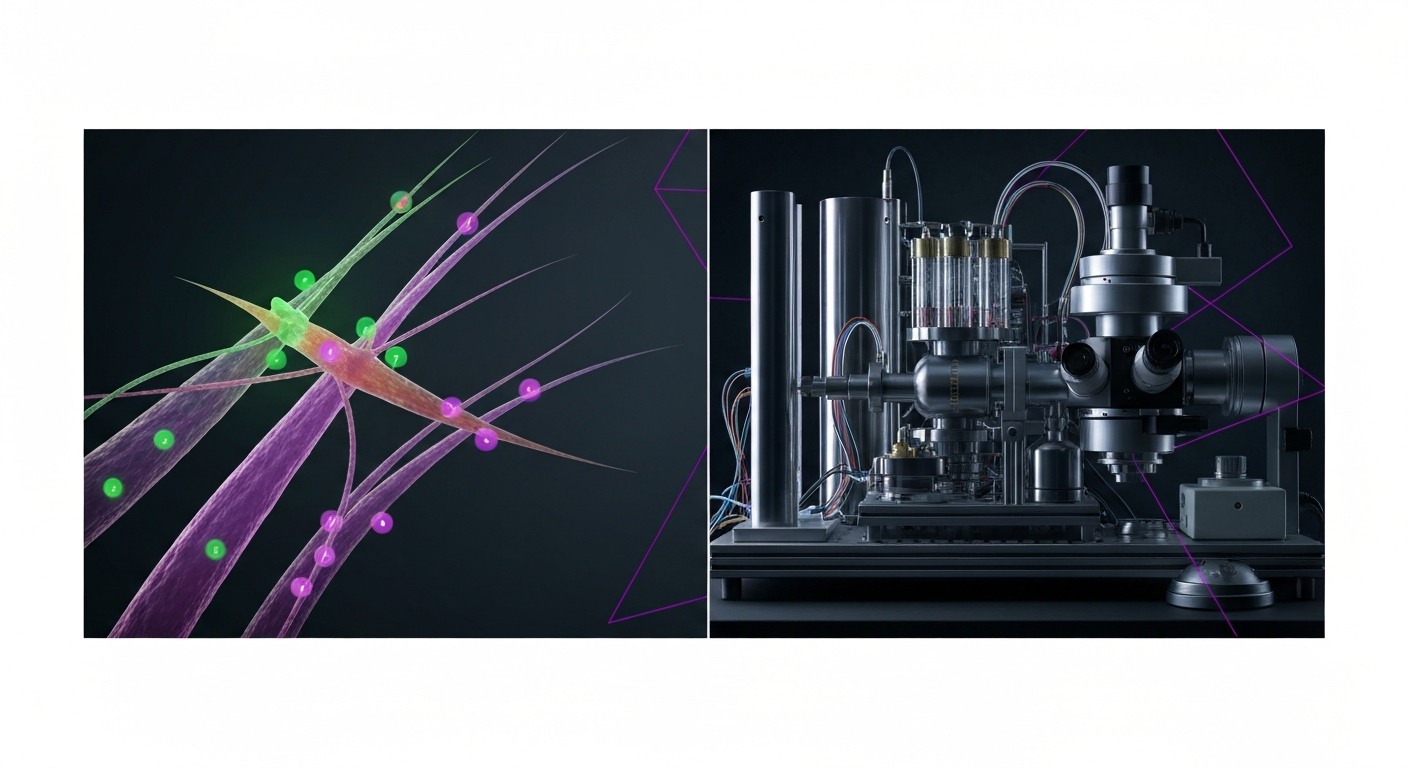
In the world of preclinical research, the quest for compounds that can modulate the body’s innate healing processes is a major frontier. Among the most studied subjects are two peptides: BPC-157 and TB-500. Both have garnered significant attention in laboratory settings for their potential roles in tissue repair and regeneration. While they share a common goal, their origins, mechanisms, and applications in scientific models are distinct. This article compares these two fascinating peptides to clarify their unique contributions to regenerative science.
This content is for informational and educational purposes only. BPC-157 and TB-500 are research compounds and are not approved for human use.
Before delving into the complex biochemical pathways, a high-level comparison can help frame the discussion. Both peptides are subjects of intense investigation for their reparative properties, yet they operate through fundamentally different biological channels. BPC-157 is often associated with localized, potent angiogenic effects, while TB-500 is recognized for its systemic role in cell migration and actin regulation. The table below provides a concise overview of their key characteristics as documented in scientific literature, highlighting the core distinctions that guide their separate and combined study in research models.
| Feature | BPC-157 | TB-500 (Thymosin Beta-4 Fragment) |
|---|---|---|
| Origin | Synthetic peptide based on a protective protein found in human gastric juice. | Synthetic fragment of Thymosin Beta-4, a naturally occurring protein in virtually all human and animal cells. |
| Molecular Structure | A short chain of 15 amino acids (a pentadecapeptide). | A longer chain of 43 amino acids. |
| Observed Half-Life | Very short, typically measured in minutes in animal models. | Longer, estimated to be several hours, allowing for more systemic action. |
| Primary Pathways | Activates the VEGFR2-eNOS-NO pathway, promoting angiogenesis. Interacts with the FAK-paxillin pathway in fibroblasts. | Binds to G-actin, regulating actin polymerization. This is crucial for cell cytoskeleton formation, motility, and migration. |
BPC-157, which stands for “Body Protection Compound,” is a synthetic peptide whose sequence is derived from a protein discovered in human gastric juice. Its initial investigation focused on its profound cytoprotective and organo-protective effects within the gastrointestinal tract, particularly its ability to counteract damage from NSAIDs in animal models. However, subsequent laboratory work revealed its benefits extend far beyond the gut. The mechanistic evidence points to a multi-faceted approach to tissue repair, primarily centered on blood vessel formation and direct cellular stimulation.
A cornerstone of BPC-157’s function is its interaction with the vascular system. Preclinical data strongly suggests it promotes angiogenesis—the formation of new blood vessels. It appears to achieve this by upregulating key growth factor pathways without directly binding to their receptors. Specifically, studies indicate BPC-157 activates the Vascular Endothelial Growth Factor Receptor 2 (VEGFR2). This activation triggers a downstream cascade involving the endothelial Nitric Oxide Synthase (eNOS) enzyme, leading to increased production of Nitric Oxide (NO). NO is a potent vasodilator and a critical signaling molecule for blood vessel health and creation, effectively building the “supply lines” needed for tissue regeneration.
Beyond its vascular effects, BPC-157 has been observed to have a direct, robust impact on connective tissue cells. In in vitro experiments using tendon explants from rats, the presence of BPC-157 significantly accelerated the outgrowth of tendon fibroblasts. These fibroblasts are the primary cells responsible for producing collagen and other extracellular matrix components that form tendons and ligaments. Mechanistic evidence suggests BPC-157 may achieve this by activating the FAK-paxillin signaling pathway, which is essential for cell adhesion, migration, and survival. This direct stimulation of fibroblasts makes it a prime subject of study for tendon, ligament, and muscle injuries in laboratory settings.
TB-500 is the common research name for a synthetic peptide fragment of Thymosin Beta-4 (Tβ4), a protein found in nearly all human and animal cells. Tβ4 is a highly conserved and versatile protein, playing a vital role in tissue development, repair, and inflammation modulation. Unlike BPC-157’s more targeted action on angiogenic pathways, TB-500’s primary mechanism is far more fundamental: it regulates actin, a protein that is the building block of the cellular cytoskeleton. This core function gives it a broad, systemic influence over cellular behavior, particularly cell movement.
The primary biochemical function of Thymosin Beta-4 is to act as an actin-sequestering protein. Inside a cell, actin exists in two states: globular monomers (G-actin) and filamentous polymers (F-actin). F-actin forms the structural scaffolding—the cytoskeleton—that gives a cell its shape and allows it to move. Tβ4 binds to G-actin monomers, preventing them from spontaneously polymerizing. In doing so, it maintains a large, ready-to-use pool of actin monomers. When a cell receives a signal to move or change shape (for example, to migrate to an injury site), Tβ4 releases its bound actin, allowing for rapid polymerization and cytoskeletal rearrangement. This dynamic control over the cell’s structural components is central to its regenerative potential.
By controlling actin dynamics, TB-500 effectively facilitates cell migration. This is a critical step in any healing process. For a wound to close, cells like keratinocytes (skin cells) and endothelial cells (blood vessel lining cells) must travel to the damaged area. Preclinical studies have shown that Tβ4 promotes the migration of these and other key cell types, including stem/progenitor cells, which can differentiate into various specialized cells needed for repair. Furthermore, Tβ4 has demonstrated anti-inflammatory properties in laboratory models, helping to downregulate pro-inflammatory cytokines. This combination of enhanced cell motility and reduced inflammation creates a favorable environment for efficient tissue regeneration.
The scientific literature on both BPC-157 and TB-500 is extensive, though it remains confined to in vitro (cell culture) and in vivo (animal) models. This body of work provides the foundation for understanding their distinct and complementary roles in tissue repair. It is crucial to remember that these findings in animal models do not necessarily translate to human efficacy or safety.
For BPC-157, the preclinical data strongly supports its role in healing connective tissues and the gastrointestinal system. Key findings include:
For TB-500 (Thymosin Beta-4), the evidence points toward a more systemic and widespread regenerative capacity, driven by its fundamental role in cell motility.
In research circles, the combined administration of BPC-157 and TB-500 is colloquially known as the “Wolverine Stack,” a nod to the comic book character’s legendary healing factor. The rationale for this combination is not redundancy but synergy. The two peptides address different and complementary aspects of the complex, multi-stage process of tissue repair. By targeting separate but interconnected pathways, their combined use in a laboratory setting hypothetically creates a more comprehensive and robust pro-healing environment than either could alone.
Think of the healing process as a major construction project. BPC-157 acts as the civil engineer and logistics manager. Its primary role is to rapidly build new blood vessels (angiogenesis), creating the roads and supply lines necessary to deliver nutrients, oxygen, and repair cells to the damaged site. It also directly stimulates the local “construction workers”—the fibroblasts—to start producing collagen and rebuilding the structural matrix.
TB-500, on the other hand, acts as the workforce mobilizer. Its systemic effect on actin regulation enhances the motility of all cells. It essentially gives the repair cells—the endothelial cells, keratinocytes, and immune cells—the ability to travel quickly and efficiently along the “roads” that BPC-157 built. It ensures that the right workers get to the construction site promptly to perform their specialized tasks. Together, one builds the infrastructure while the other ensures a rapid and efficient deployment of the cellular workforce, covering the healing cascade from both a structural and a cellular-mobilization perspective.
The primary difference lies in their operational level. BPC-157’s mechanism is more targeted, directly promoting the formation of new blood vessels through the VEGFR2/NO pathway and stimulating fibroblast activity. In contrast, TB-500’s mechanism is more fundamental and systemic. It operates by regulating the actin cytoskeleton within cells, which is a core process essential for cell migration, division, and differentiation across a wide variety of cell types throughout the body.
Based on preclinical literature, their mechanisms suggest different areas of focus. BPC-157, with its potent effects on fibroblast outgrowth and collagen synthesis, is often studied for injuries to dense connective tissues like tendons, ligaments, and muscle. TB-500’s broad, systemic role in promoting cell migration and reducing inflammation makes it a subject of investigation for a wider array of conditions, including dermal wounds, cardiac damage, and even ocular injuries where cell motility is a key factor in healing.
No. It is critical to state unequivocally that neither BPC-157 nor TB-500 is approved by the FDA or any other major regulatory agency for human consumption or therapeutic use. They remain classified as research chemicals, intended strictly for in vitro studies and laboratory experimentation. Any discussion of their properties is based on this preclinical context and is for educational purposes only.
The investigation into regenerative peptides is a rapidly evolving field, with ongoing studies seeking to further elucidate the precise mechanisms of BPC-157 and TB-500. Researchers continue to explore how these compounds interact with cellular machinery to promote repair in controlled laboratory settings. For a closer look at this compound, see Wolverine Stack (BPC-157 + TB-500). For related mechanisms in other research peptides that modulate inflammation and cellular growth, see BPC-157 Research Guide, TB-500 / Thymosin Beta-4 Guide.

The Reviv Peptides Research Team is a collective of science writers and researchers dedicated to producing evidence-based, peer-reviewed-grade content about research peptides. Our work focuses on molecular mechanisms, receptor pharmacology, and preclinical data — including GLP-1/GIP/glucagon incretin biology, growth hormone axis peptides (GHRH analogs and ghrelin-receptor secretagogues), mitochondrial-derived peptides (MOTS-c, SS-31), tissue-repair peptides (BPC-157, TB-500, GHK-Cu), and nootropic peptides (Semax, Selank). All content is written in a strict preclinical/laboratory context; none of our editorial material is intended as medical advice. Every guide is reviewed for scientific accuracy against published peer-reviewed literature.
A mechanistic ranking of weight-loss peptides studied in 2026: GLP-1s, GLP-1/GIP, triple agonists, AOD-9604, 5-Amino-1-MQ, and tesamorelin.

Semax is an ACTH(4-10) analog that elevates BDNF; Selank is a tuftsin analog modulating GABA and immune pathways. Full comparison.
No account yet?
Create an Account