KLOW vs GLOW Peptide Blends: What’s the Difference?
Ask five researchers what separates the KLOW and GLOW peptide blends and you’ll get five slightly different answers. That’s a

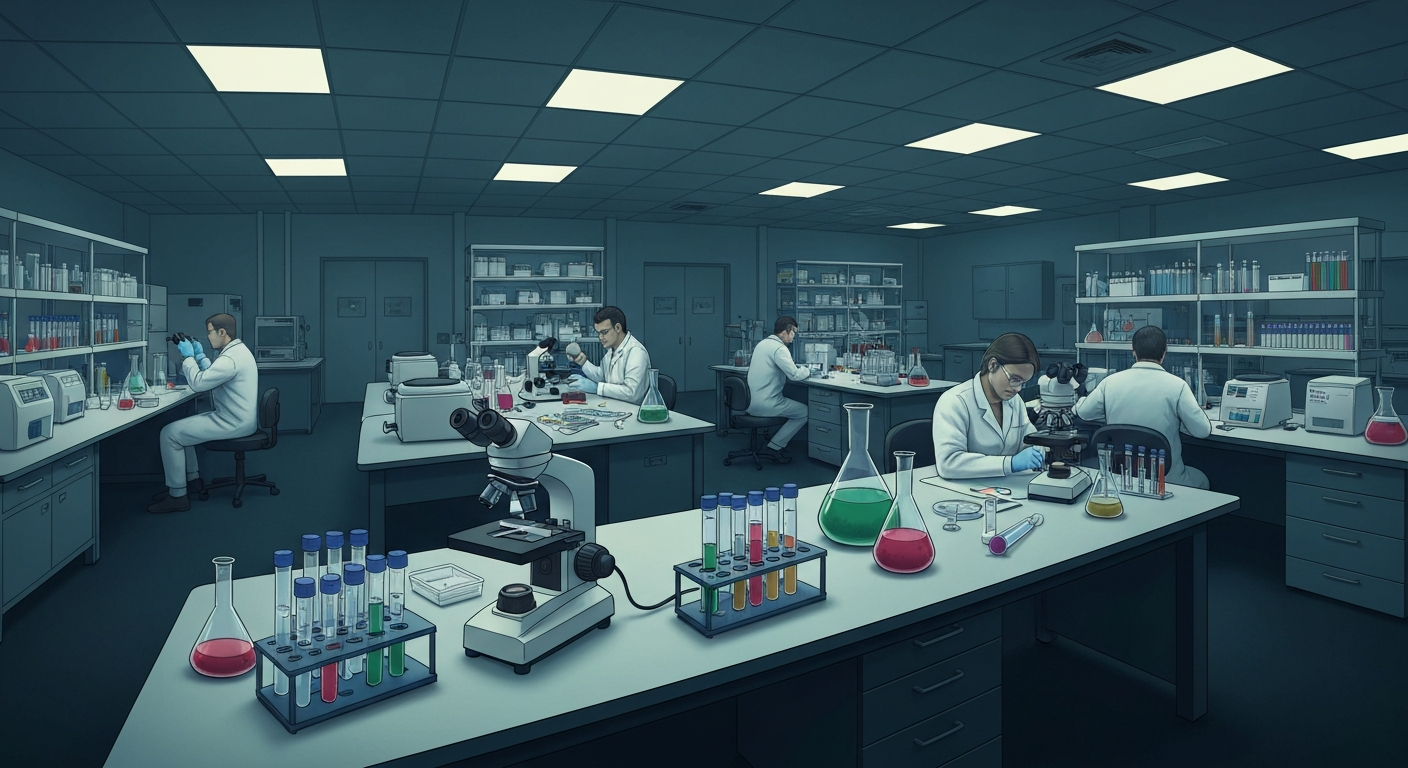
Receiving a vial of lyophilized peptide powder can be the start of groundbreaking lab work. But improper handling can compromise the entire study. Your preclinical work depends on three steps done right: reconstituting, dosing, and storing these delicate molecules. This guide gives you a full, step-by-step protocol for reconstituting peptides with bacteriostatic water. It shows how to calculate precise dosages for your experimental models. It also covers proper storage for long-term stability. The goal is research that is accurate and repeatable.
See our foundational guide to buying and researching peptides in Canada.
When you receive a research peptide, it almost always arrives as a dry, white, crystalline powder. It may also look like a solid “puck” at the bottom of a vial. This state comes from a process called lyophilization, or freeze-drying. Lyophilization is an advanced drying method. The peptide solution is frozen first. Then the surrounding pressure is reduced. This lets the frozen water sublimate — it turns straight from a solid into a gas. This process is crucial for preserving complex molecules like peptides.
The primary reason for lyophilization is stability. In a water-based solution, peptides break down through hydrolysis. That means water molecules break the peptide bonds. Microbes can also contaminate the solution.[1] Removing the water locks the peptide’s complex three-dimensional structure in place. That structure — its secondary and tertiary folding — is often essential for its biological activity (e.g., binding to a specific receptor like the GHSR or MC4R). This makes the peptide stable for shipping. It can then be stored long-term at room temperature or in a fridge. It will not degrade, so the product you receive is identical to the product that was synthesized. Reconstitution is the process of carefully adding a solvent back in. It returns the peptide to a usable liquid state for your in-vitro or in-vivo studies.
The solvent you choose to reconstitute your peptide is a critical decision. It affects the solution’s sterility and shelf-life. The most common choices in a research setting are bacteriostatic water and sterile water for injection. They may seem similar. But their makeup and ideal use cases are distinct. Pick the right one based on the protocol and how long you plan to store the solution. Note: This information is for educational purposes only. These compounds are not for human use.
Bacteriostatic water is the preferred solvent for most multi-use peptide vials. It is sterile water that contains 0.9% benzyl alcohol (9mg/mL). This small amount of benzyl alcohol acts as a bacteriostatic agent. That means it prevents bacteria from reproducing. It doesn’t kill all bacteria on contact, but it effectively blocks growth. This matters a great deal for vials that will be punctured many times with a syringe. Each puncture carries a small risk of introducing contaminants.
Sterile water is simply purified water that has been sterilized and packaged for single use. It contains no preservatives or bacteriostatic agents. Once the vial’s seal is broken, it is no longer considered sterile for later uses. This makes it ideal for experiments where the whole reconstituted solution will be used at once. It also suits work that is highly sensitive to preservatives, such as certain cell culture studies.
Some peptides are highly basic or hydrophobic. Examples include certain long-chain GH-releasing peptides and melanocortins. These can be hard to dissolve in neutral pH water, and the result is a cloudy solution. In these specific cases, a dilute solution of acetic acid (e.g., 0.1% acetic acid) may be needed for full solubility. The supplier typically provides this information on the Certificate of Analysis or a technical data sheet. Always consult the manufacturer’s specific advice before using an alternative solvent.
Proper reconstitution technique is paramount. It preserves the peptide’s structure and keeps dosing accurate. Rushing this process or using improper methods can physically damage the peptide chains. That would render your research materials useless. The key principles are sterility, gentleness, and patience. Follow these steps for reliable and consistent results in your laboratory setting.
Disclaimer: This guide is for research and educational purposes only. Peptides mentioned are not for human consumption or therapeutic use. Always use appropriate personal protective equipment (PPE) in a laboratory environment.
Accurate dosing is fundamental to reproducible scientific literature. Miscalculating the amount of peptide given in an experiment can invalidate results. The process starts with understanding concentration (mg/mL or mcg/mL). You then convert that to a volume. Finally, you read that volume accurately on a syringe. Let’s walk through a common scenario for a preclinical study.
First, you need to know the final concentration of your solution. This is the total amount of peptide divided by the total volume of solvent you added.
To make the math easier, convert milligrams (mg) to micrograms (mcg). Research doses are often in mcg. (1mg = 1000mcg).
Calculation: 5mg = 5000mcg. So, the concentration is 5000mcg / 2mL = 2500mcg per 1mL.
Most laboratory work uses U-100 insulin syringes for precise, small-volume measurements. A U-100 syringe holds 1mL in total, and its volume is marked in “units.” There are 100 units in 1mL. Therefore, 10 units on the syringe equals 0.1mL.
Let’s say your experimental protocol requires a dose of 500mcg for your subject.
You would therefore draw the clear peptide solution into your U-100 syringe. Stop when the top of the plunger is exactly on the “20” mark. This ensures you are giving a precise 500mcg dose for your study.
The chemical stability of a peptide depends heavily on its storage conditions. Improper storage is one of the fastest ways to degrade your valuable research compounds. The result is a loss of bioactivity and wasted resources. The storage rules differ a great deal between the lyophilized (powder) and reconstituted (liquid) states.
In their freeze-dried powder form, peptides are relatively stable. They can typically withstand shipping at ambient temperatures for several days or even weeks without much degradation. For long-term storage in the lab, though, best practice is a freezer at about -20°C. This minimizes any slow degradation pathways and can preserve the peptide for years. If a freezer is not available, a refrigerator (2-8°C) is a suitable backup for many months. The key is to keep vials away from light, moisture, and frequent temperature swings.
Once you add a solvent, the peptide is far more fragile. The water-based environment leaves it open to hydrolysis and microbial growth. All reconstituted peptide solutions must be stored in a refrigerator at 2-8°C.
A cloudy or hazy solution after reconstitution can point to a few issues. First, give the peptide enough time to dissolve fully. Let it sit at room temperature for 15-30 minutes and swirl gently again. If it remains cloudy, poor solubility could be the cause. Some peptides need a specific pH or a solvent like dilute acetic acid. Aggregates may also have formed, or the vial may be contaminated. It is generally advised not to use a persistently cloudy solution in critical studies. The effective concentration and purity are unknown.
Freezing is the best method for long-term storage of lyophilized powder. But it is generally not recommended for reconstituted liquid peptides. Ice crystals form during freezing and melt again during thawing. That puts physical stress on the peptide’s structure, causing denaturation and aggregation. This “freeze-thaw” cycle can sharply reduce the peptide’s bioactivity. The standard and safest practice for storing liquid peptides is refrigeration at 2-8°C. That avoids this risk.
For the vast majority of commercially available research peptides, bacteriostatic water is the standard solvent for multi-use applications. However, the ultimate authority is always the technical data sheet or Certificate of Analysis (CoA) from the peptide supplier. This document will state if the peptide has unique solubility requirements. For example, it may need a slightly acidic solution to dissolve properly. If no specific instructions are given, bacteriostatic water is the default choice. It ensures a stable, preserved solution for your laboratory work.
Mastering peptide reconstitution, dosing, and storage is essential for reliable and reproducible preclinical data. These sterile and gentle techniques protect the integrity of the molecule. They also ensure the accuracy of your experiments. Want a closer look at a specific product tied to these precise handling techniques? See Bacteriostatic Water 10ml. To explore peptides that operate through related signaling pathways, such as the ghrelin receptor or melanocortin system, see BPC-157 Research Guide, TB-500 / Thymosin Beta-4 Guide.
Sources: [1] Manning MC, Chou DK, Murphy BM, Payne RW, Katayama DS. Stability of protein pharmaceuticals: an update — Pharm Res / PubMed, 2010.

The Reviv Peptides Research Team is a collective of science writers and researchers dedicated to producing evidence-based, peer-reviewed-grade content about research peptides. Our work focuses on molecular mechanisms, receptor pharmacology, and preclinical data — including GLP-1/GIP/glucagon incretin biology, growth hormone axis peptides (GHRH analogs and ghrelin-receptor secretagogues), mitochondrial-derived peptides (MOTS-c, SS-31), tissue-repair peptides (BPC-157, TB-500, GHK-Cu), and nootropic peptides (Semax, Selank). All content is written in a strict preclinical/laboratory context; none of our editorial material is intended as medical advice. Every guide is reviewed for scientific accuracy against published peer-reviewed literature.
Ask five researchers what separates the KLOW and GLOW peptide blends and you’ll get five slightly different answers. That’s a
A plain-language guide to the Canadian legal framework around peptides and the supplier criteria researchers should actually verify.
Discount Applied Successfully!
Your savings have been added to the cart.
Each tier you reach gives you more. Open one to see what it unlocks.
See what it takes to reach each tier.
Highest tier
Each tier you reach gives you more. Open one to see what it unlocks.
See what it takes to reach each tier.
Highest tier