
Best Peptides for Weight Loss in 2026: A Mechanistic Guide
A mechanistic ranking of weight-loss peptides studied in 2026: GLP-1s, GLP-1/GIP, triple agonists, AOD-9604, 5-Amino-1-MQ, and tesamorelin.

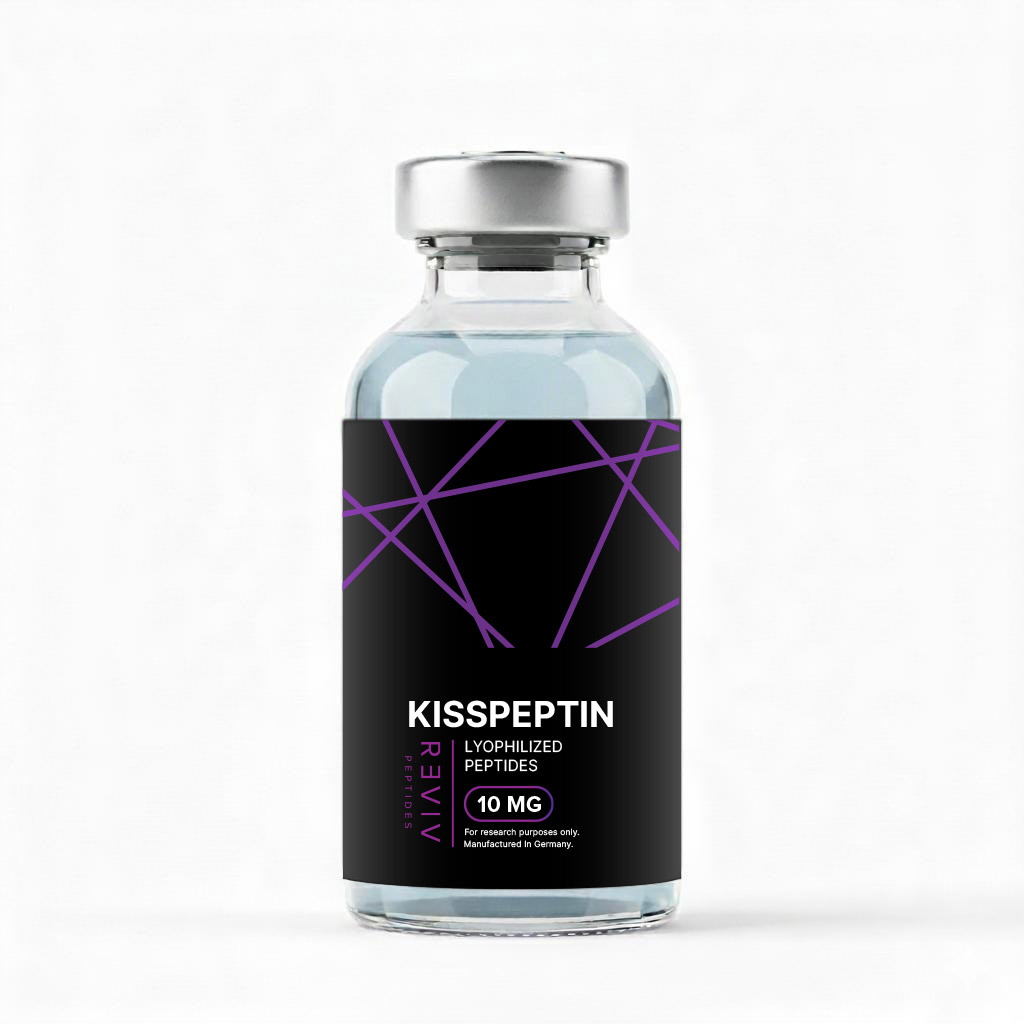
Inject kisspeptin-10 subcutaneously in a healthy male, and plasma LH rises within 30 minutes — sometimes dramatically. That's not a theoretical effect; it's been reproduced in multiple controlled clinical studies, including work published by Dhillo and colleagues at Imperial College London showing that kisspeptin infusion triggers a robust LH pulse detectable within the first hour. What makes that finding significant is what it reveals about the HPG axis architecture: GnRH neurons don't respond to most upstream signals directly. They respond to kisspeptin. Block GPR54 — the kisspeptin receptor — and the hypothalamic-pituitary-gonadal axis goes quiet regardless of what other hormonal signals are present. Activate it, and the whole reproductive cascade follows.
Kisspeptin-10 is the minimal active fragment — the C-terminal decapeptide (YNWNSFGLRF-NH2) that retains full agonist activity at GPR54, also called KISS1R. The parent kisspeptin protein (encoded by the KISS1 gene, originally identified as a metastasis suppressor gene before its neuroendocrine function was discovered in 2003) gets processed into fragments of varying length. Kisspeptin-10 is the shortest of these that works, which is what makes it attractive as a research tool — it's pharmacologically clean and mechanistically specific in a way that larger protein fragments aren't. Mutations in GPR54 cause hypogonadotropic hypogonadism in humans, which is how we know this receptor isn't redundant; it's load-bearing for reproductive function.
This guide covers what kisspeptin-10 does to the HPG axis, how GPR54 activation drives GnRH-LH-FSH-gonadal steroidogenesis in sequence, what the published rodent and human data show on testosterone, fertility, and reproductive neuroendocrinology, and what researchers need to know about sourcing and study design.
Kisspeptin-10 is a 10-amino-acid peptide derived from the larger kisspeptin-54 precursor. Published research shows that Kisspeptin-10 is the minimal kisspeptin sequence with full intrinsic bioactivity at GPR54, making it the standard tool peptide for studying kisspeptin signal pathways. The decapeptide binds GPR54 with low-nanomolar affinity and triggers the Gq/11-PLC-IP3 signal cascade that elevates intracellular calcium in GnRH neurons.
The downstream effect is GnRH pulse generation. Kisspeptin-10 acts upstream of GnRH; it does not directly stimulate the pituitary. GnRH then binds receptors on pituitary gonadotrophs and stimulates LH and FSH secretion, which in turn drives testicular Leydig-cell testosterone production in men and ovarian estradiol production in women.
GPR54 is a G protein-coupled receptor whose physiological role was unknown until 2003, when loss-of-function mutations were identified in patients with isolated hypogonadotropic hypogonadism. Published research shows that loss-of-function mutations of the GPR54 gene were found in patients with hypogonadotropic hypogonadism, establishing kisspeptin-GPR54 signalling as the gatekeeper of the HPG axis.
The hypothalamic kisspeptin neurons are organised into two populations: the AVPV (anteroventral periventricular nucleus) population, which drives the LH surge in females, and the ARC (arcuate nucleus) population, which generates the tonic GnRH pulse pattern responsible for baseline gonadotropin secretion in both sexes. Both populations express GPR54 on their projections to GnRH neurons.
In published clinical studies in healthy men, the effect of kisspeptin-10 administration is a rapid, dose-dependent rise in plasma LH within 30 minutes, followed by a slower testosterone rise that peaks at 60 to 120 minutes. Published research shows that kisspeptin may stimulate gonadotrophins in a more physiological manner when compared with direct GnRH agonist administration, because it triggers endogenous GnRH pulses rather than imposing exogenous gonadotropin signal.
Typical published doses are 0.3 to 10 μg/kg intravenously or 1 to 100 μg subcutaneously. At standard research doses, plasma testosterone increases of 20 to 40 percent above baseline are reported within 90 minutes; absolute increases depend on the subject’s baseline gonadotropin tone and testicular reserve. The kisspeptin-10 response is preserved in older men, which has driven interest in the compound as a research tool for late-onset hypogonadism.
Hypogonadotropic hypogonadism (HH) is a research-grade indication where kisspeptin-10 has produced striking effects. Published research shows that continuous kisspeptin infusion restores gonadotropin pulsatility in patients with loss-of-function mutations of the gene encoding the kisspeptin receptor (specifically those patients with intact downstream GnRH-receptor signalling).
Published research shows that kisspeptin agonists appear as valuable new tools in treatment for reproduction troubles in both males and females, with potential applications in HH, polycystic ovary syndrome, IVF trigger protocols, and male hypogonadism research.
In published research contexts, kisspeptin-10 raises endogenous LH and testosterone in men with intact HPG axes. The compound is studied for male hypogonadism, late-onset testosterone decline, and as a potential research tool for assessing pituitary-gonadal reserve. Unlike exogenous testosterone replacement, kisspeptin-10 works upstream and preserves testicular function rather than suppressing it. This is the same biological reason researchers consider kisspeptin agonists for post-cycle endogenous-axis recovery in steroid research contexts.
Traditional post-cycle therapy compounds (clomiphene, tamoxifen, hCG) work on different bottlenecks. Clomiphene and tamoxifen are selective estrogen receptor modulators that block negative-feedback estrogen signalling at the hypothalamus and pituitary, indirectly raising GnRH output. hCG is an LH analogue that directly stimulates Leydig cells, bypassing the hypothalamus and pituitary altogether. Kisspeptin-10 sits upstream of all three: it directly stimulates the endogenous kisspeptin-GPR54-GnRH pathway, producing physiological pulsatile gonadotropin secretion that mimics the body’s own rhythm. In research contexts, this physiological-pulse mechanism is the strongest argument for the compound over the older PCT classes.
Published research protocols use kisspeptin-10 at:
The peptide is supplied as a lyophilised powder for reconstitution in bacteriostatic water. Half-life is short (around 30 minutes by IV); pulsatile or continuous dosing is preferred over single boluses for any sustained-effect research. Dosing frequency in research models ranges from twice daily to continuous infusion depending on the endpoint.
Reported adverse events in published clinical studies are minimal: transient injection-site reactions, mild headache, and occasional flushing. No hepatic, cardiac, or off-target endocrine signal has been documented. The selective HPG-axis mechanism means the peptide does not stimulate other hormone axes (no effect on prolactin, ACTH, or thyroid axis in published research).
Contraindications include pregnancy (the kisspeptin system is involved in pregnancy maintenance and exogenous stimulation could disrupt placental function) and concurrent GnRH-receptor antagonist therapy (the downstream blockade nullifies the upstream signal). The compound is generally well-tolerated; chronic dosing safety beyond 6 months has not been comprehensively characterised in humans.
Kisspeptin-54 is the longer precursor (54 amino acids); kisspeptin-10 is the C-terminal decapeptide that retains full GPR54 agonist activity. The two have similar potency at the receptor but different half-lives and tissue distribution. Kisspeptin-10 is shorter, more easily synthesised, and faster-acting; kisspeptin-54 has a longer plasma half-life and slightly different downstream pharmacokinetics. Research applications generally use kisspeptin-10 for acute HPG-axis studies and kisspeptin-54 for sustained-effect protocols.
Kisspeptin-10 is not approved by Health Canada or the FDA for any therapeutic indication. It is legal in Canada and the United States as a research chemical sold under research-use-only labelling. The peptide is not on the World Anti-Doping Agency prohibited list as of 2026, though athletes should monitor regulatory updates given the gonadotropin-stimulating mechanism.
Reproducible reproductive endocrinology research depends on the integrity of the input material:
Reviv Peptides supplies kisspeptin-10 at 10mg per vial with third-party COA and HPLC purity confirmation. View the Kisspeptin-10 10mg product page.
In research, kisspeptin-10 stimulates endogenous LH, FSH, and testosterone via the GPR54-GnRH pathway. Applications include male and female hypogonadism research, hypogonadotropic hypogonadism, polycystic ovary syndrome, IVF trigger protocols, and as a tool for assessing pituitary-gonadal reserve.
Single doses produce plasma testosterone increases of 20 to 40 percent above baseline within 90 minutes in healthy men. The response is dose-dependent and preserved in older men with intact testicular reserve.
Published research protocols use 0.3 to 10 μg/kg by intravenous bolus or 1 to 100 μg by subcutaneous injection. Half-life is short (around 30 minutes), so pulsatile or continuous dosing is preferred for sustained research endpoints.
Kisspeptin-10 binds GPR54 receptors on hypothalamic GnRH neurons, triggering GnRH release through the Gq/11-PLC-IP3 signal cascade. GnRH then drives pituitary LH and FSH secretion, which stimulates gonadal steroidogenesis. The mechanism preserves physiological pulsatility.
In research contexts, kisspeptin-10 reliably raises endogenous LH and testosterone in men with intact HPG axes. It is studied for male hypogonadism, late-onset testosterone decline, and endogenous-axis recovery research, with the advantage of preserving testicular function rather than suppressing it.
Key data point: Dhillo et al. (2005, JCEM) demonstrated that a single IV bolus of Kisspeptin-10 at 1 nmol/kg in healthy men produced a 6-fold LH increase within 30 minutes versus no LH response with vehicle — establishing Kisspeptin-10 as the most potent single-dose LH secretagogue identified at that time and confirming GPR54 as a tractable pharmacological target for reproductive endocrinology.
Kisspeptin-10 is the standard tool peptide for HPG-axis research. As the minimal active fragment of kisspeptin retaining full GPR54 agonist activity, the decapeptide drives endogenous GnRH pulse generation, LH and FSH secretion, and downstream testosterone and estradiol production. The compound’s strongest published applications are in hypogonadotropic hypogonadism research, male hypogonadism studies, and as an upstream alternative to traditional PCT compounds in research contexts. Safety profile is favourable; human evidence base is moderate; therapeutic approval does not yet exist. For researchers in reproductive neuroendocrinology, kisspeptin-10 is the most mechanistically clean tool for interrogating the kisspeptin-GPR54-GnRH axis.
All products sold by Reviv Peptides are for research and educational purposes only and are not intended for human consumption.

The Reviv Peptides Research Team is a collective of science writers and researchers dedicated to producing evidence-based, peer-reviewed-grade content about research peptides. Our work focuses on molecular mechanisms, receptor pharmacology, and preclinical data — including GLP-1/GIP/glucagon incretin biology, growth hormone axis peptides (GHRH analogs and ghrelin-receptor secretagogues), mitochondrial-derived peptides (MOTS-c, SS-31), tissue-repair peptides (BPC-157, TB-500, GHK-Cu), and nootropic peptides (Semax, Selank). All content is written in a strict preclinical/laboratory context; none of our editorial material is intended as medical advice. Every guide is reviewed for scientific accuracy against published peer-reviewed literature.
A mechanistic ranking of weight-loss peptides studied in 2026: GLP-1s, GLP-1/GIP, triple agonists, AOD-9604, 5-Amino-1-MQ, and tesamorelin.

Semax is an ACTH(4-10) analog that elevates BDNF; Selank is a tuftsin analog modulating GABA and immune pathways. Full comparison.
No account yet?
Create an Account