Why Buy GLOW Blend (BPC-157 + TB-500 + GHK-Cu)?
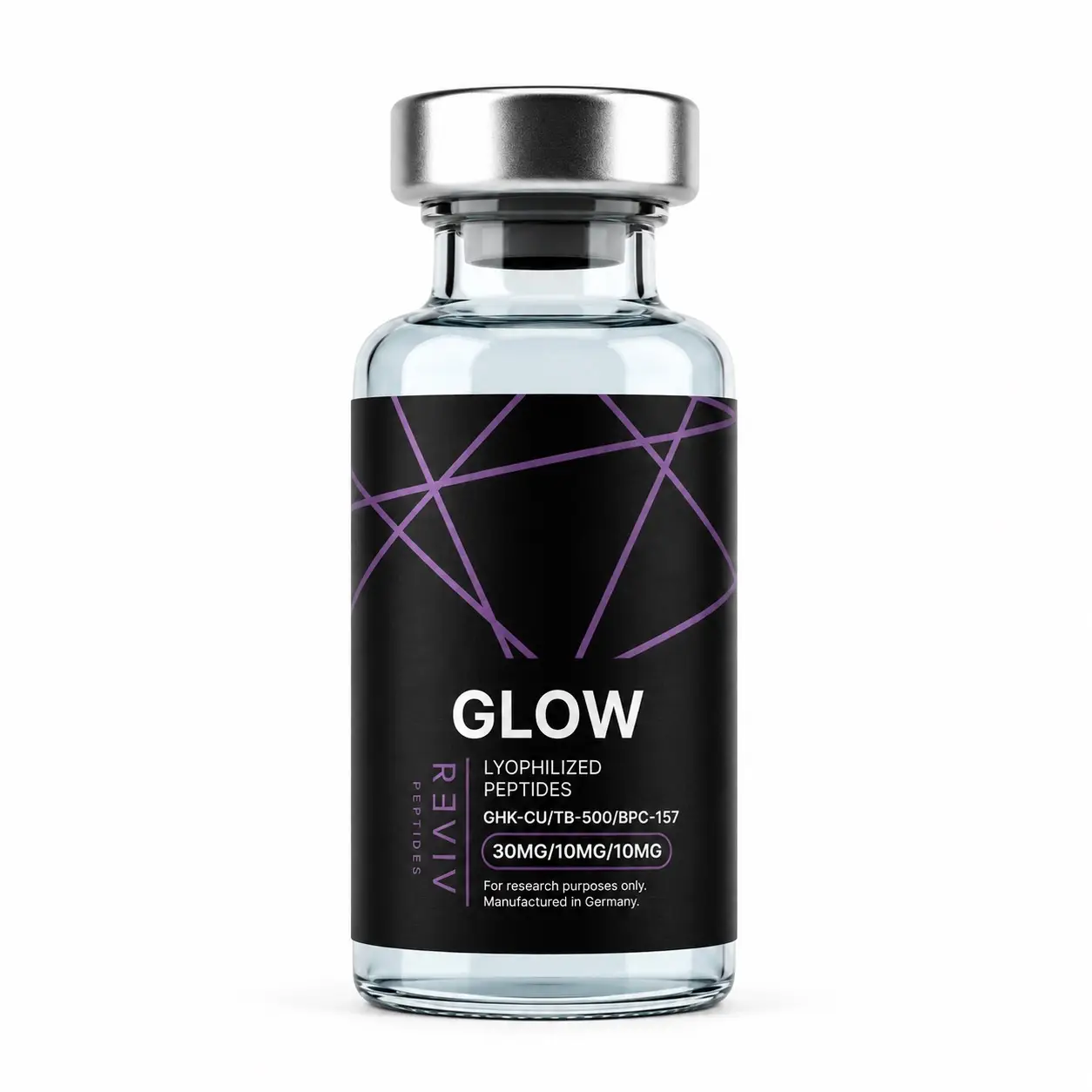
Researchers choose the GLOW Blend because it puts three repair peptides in one vial, so a single study can look at how they work together. It joins BPC-157 (a gut and tissue repair peptide), TB-500 (a peptide studied for blood vessel growth and recovery), and GHK-Cu (a copper peptide studied for collagen and skin renewal). BPC-157 has been studied for soft-tissue and tendon healing in animals.[1] GHK-Cu has been studied for skin repair and collagen.[4]
Each peptide works on a different layer of repair. BPC-157 supports local tissue, TB-500 supports blood vessels and recovery, and GHK-Cu supports the matrix that holds tissue together. This makes it a useful tool for skin, anti-ageing, and recovery research.
Benefits & Uses
This blend is studied for full-depth tissue repair because its three peptides act on different healing pathways. Areas of research include:
- Wound healing and tissue repair models[2]
- Collagen (types I and III) and elastin signalling (GHK-Cu)[4]
- Blood vessel growth and repair research (TB-500 + BPC-157)[2]
- Anti-ageing and skin renewal biology[4]
- Hair follicle and skin regeneration studies[5]
- Anti-inflammatory, multi-pathway research
- Tendon, ligament, and joint repair models[1]
Component Mechanisms
Each peptide acts through its own pathway. BPC-157 raises nitric oxide signalling and growth factors like VEGF, which helps new blood vessels form at injury sites in animal studies.[2] TB-500 (a thymosin beta-4 peptide) binds actin inside cells to help them move, which supports tissue repair and blood vessel growth.[3] GHK-Cu is a copper peptide that has been shown to change the activity of many genes tied to collagen, repair, and antioxidant defence, and it carries copper used for collagen cross-linking.[5]
Vial Specifications
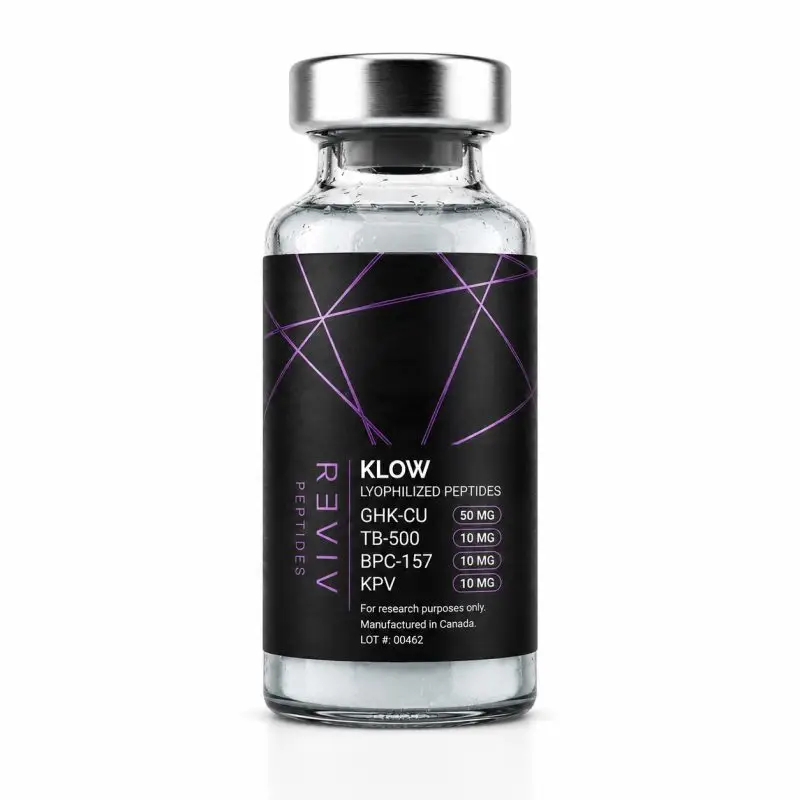
- Contents: GHK-Cu 30 mg + TB-500 10 mg + BPC-157 10 mg
- Total peptide: 50 mg per vial
- Purity: 99% or higher for each peptide (third-party HPLC tested)
- Form: Lyophilized (freeze-dried) powder
- Storage: Store at -20 °C for long-term; keep away from light (GHK-Cu)
- Reconstitution: Bacteriostatic water
Canada FAQs
How does it differ from the Wolverine Stack?
The main difference is GHK-Cu. The Wolverine Stack (BPC-157 + TB-500) is studied for repair and recovery in tendon, muscle, and gut. The GLOW Blend adds GHK-Cu, which brings a skin, collagen, and hair-renewal layer. That makes it better suited for skin and anti-ageing research.
Why include GHK-Cu with BPC-157 and TB-500?
GHK-Cu is added because it works on the matrix layer of healing. It is studied for collagen cross-linking and elastin. BPC-157 and TB-500 work on local and blood-vessel repair. Together the three peptides cover the full repair cycle.
Is the GLOW Blend available in Canada?
Reconstitution & Dosing Guide
How to Reconstitute
Add 3.0 mL of bacteriostatic water to the vial. Aim the water slowly down the inside wall of the vial. Do not spray it straight onto the powder. Swirl gently until it fully dissolves. Do not shake. This gives about 16.7 mg/mL total blend (50 mg of peptide in 3 mL). Store the mixed vial at 4 °C and use within 28 days.
To work out the draw for any other water volume or target dose, use our peptide reconstitution calculator.
Low Starting Dose
- Dose per injection: about 333 mcg total blend — 2 units (0.02 mL) on a U-100 insulin syringe
- That draw contains: GHK-Cu 200 mcg + TB-500 67 mcg + BPC-157 67 mcg
- Frequency: once daily, subcutaneous
- Cycle length: 4–8 weeks, then 2–4 weeks off
Adjust based on how each peptide responds in the model.
Sources: [1] BPC-157 and musculoskeletal soft-tissue healing — PubMed. [2] BPC-157, VEGFR2 and angiogenesis — PubMed. [3] Thymosin beta-4 (TB-500) and actin — PubMed. [4] GHK peptide and skin regeneration — PubMed. [5] GHK copper peptide and gene expression — PubMed.

Reviews
There are no reviews yet.