Why Buy MOTS-c?
Researchers buy MOTS-c because it is studied for better insulin sensitivity, fat burning, and metabolic health, with exercise-like effects in animal models.[1] It is a 16-amino-acid peptide made inside mitochondria, coded by the 12S rRNA gene of the mitochondrial genome. It turns on AMPK, a key energy-sensing switch in cells.[1]
It is found in human blood, and its levels drop with age. Lower levels are linked to less metabolic flexibility and more insulin resistance in aging models.[2]
Benefits & Uses
MOTS-c is studied for metabolism, energy, and aging. Here are the main research uses:
- AMPK and energy-sensing pathway research[1]
- Glucose uptake and insulin sensitivity models[1]
- Fat burning and energy use studies
- Mitochondrial stress and signaling research
- Exercise-mimetic and performance models[2]
- Aging and metabolic decline research[3]
- Folate cycle and one-carbon metabolism studies
How It Works
MOTS-c works by moving from the mitochondria to the cell nucleus under stress, such as low glucose.[1] There it acts on the folate cycle and raises AICAR, a natural molecule that turns on AMPK.[1] When AMPK switches on, it pulls more GLUT4 to the cell surface for glucose uptake, boosts fat burning, slows growth signals through mTOR, and raises PGC-1α to build new mitochondria. In aged mice, giving it restored insulin sensitivity back toward young levels.[2]
10mg Vial Specifications
- Sequence: MRWQEMGYIFYPRKLR
- Molecular Weight: ~2,174 Da
- Purity: ≥99% (third-party HPLC verified)
- Form: Lyophilized (freeze-dried) powder
- Vial Size: 10 mg
- Storage: −20 °C (long-term); 4 °C (short-term)
- Reconstitution: Bacteriostatic water or sterile saline
Frequently Asked Questions
How does it differ from SS-31 in mitochondrial research?
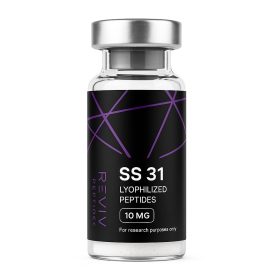
SS-31 (Elamipretide) sits in the inner mitochondrial membrane and protects cardiolipin to keep the energy chain working. MOTS-c is a signaling peptide that moves to the nucleus to control AMPK and metabolic genes. They act at different levels of mitochondrial biology.
Is MOTS-c considered an exercise mimetic?
In animal studies, MOTS-c turns on many of the same AMPK and PGC-1α pathways as aerobic exercise, improving metabolism without physical activity.[2] This makes it a useful exercise-mimetic research tool when physical exercise is not possible in a model.
Is MOTS-c available in Canada?
Yes. Reviv Peptides supplies MOTS-c in Canada as a 10 mg vial.
Reconstitution & Dosing Guide
How to Reconstitute
Add 3.0 mL of bacteriostatic water to the vial. Inject the water slowly down the inside wall of the vial — do not inject directly onto the powder. Gently swirl until fully dissolved; do not shake. This yields about 3.33 mg/mL. Store the mixed vial at 4 °C and use within 28 days.
Low Starting Amount (Research)
- Amount per measure: 200 mcg — 6 units (0.06 mL) on a U-100 insulin syringe
- Schedule: Once daily in research models
- Study length: 8–12 weeks
Sources: [1] Lee et al., MOTS-c: a mitochondrially encoded hormone that ameliorates obesity and insulin resistance — PubMed. [2] MOTS-c is a regulator of plasma metabolites and enhances insulin sensitivity (exercise mimetic) — PMC. [3] MOTS-c in human aging and age-related diseases (review) — PubMed.





Reviews
There are no reviews yet.