
Buying Peptides in Canada: Legal Framework & Supplier Criteria
A plain-language guide to the Canadian legal framework around peptides and the supplier criteria researchers should actually verify.

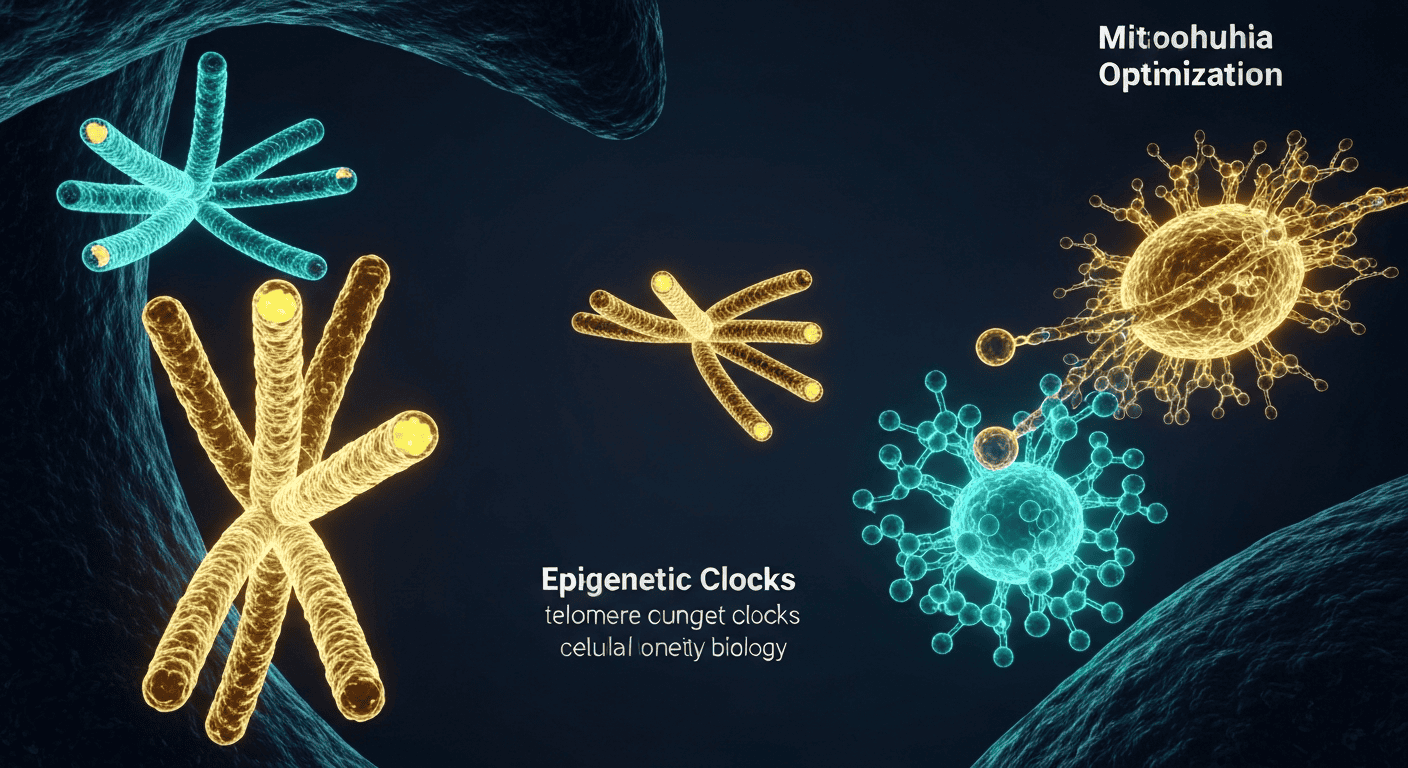
Anti-aging and longevity peptides are compounds that researchers study for their effects on the biology of aging — how cells lose function over time and what might slow that process in the lab. This is one of the most active areas of peptide science, spanning telomere biology, mitochondrial function, cellular energy, and oxidative stress. This guide explains how these compounds are studied, which ones appear most in the literature, and how they compare, with links to a detailed guide on each. Everything here is for laboratory and educational research only; none of these compounds is a licensed anti-aging medicine in Canada.
Researchers rarely study “aging” as one thing. Instead they break it into measurable cellular processes — often called the hallmarks of aging — and look at compounds that act on each one. The peptides and small molecules on this page map onto four of those processes:
Grouping the compounds this way makes the field easier to navigate: each one is essentially a different experimental tool aimed at a different hallmark.
Across published preclinical and early clinical work, this class is examined for:
Most of the strongest evidence is preclinical — cell cultures and animal studies — which is important context when reading any longevity claim.
The compounds in this area fall into two groups, and knowing which is which helps make sense of how they are studied. The first group is true peptides — short chains of amino acids that act as biological signals. Epitalon, MOTS-c, SS-31, and Humanin all belong here; each carries a specific instruction to a cell, whether that is “maintain telomeres” or “protect the mitochondria.” The second group is metabolic cofactors: NAD+ and glutathione are not peptides but small molecules the cell needs to run its energy and antioxidant systems. They are grouped with the peptides because they target the same hallmarks of aging, not because they share a structure. In practice, researchers often study one from each group side by side — a signalling peptide to change how a cell behaves, and a cofactor to support the machinery that behaviour depends on.
Six compounds account for most of the published work in this area. Each has its own detailed guide. Note that most of this evidence comes from cell cultures and animal models, so it describes biological mechanisms rather than proven outcomes in people.
Epitalon (also spelled Epithalon) is a short peptide studied for its effect on telomerase, the enzyme that maintains telomere length. In laboratory work it was reported to induce telomerase activity and telomere elongation in human cells.[1] It is the compound most associated with the telomere-maintenance angle of aging research. See the Epitalon research guide for the mechanism, or the Epitalon product page for specifications.
NAD+ is not a peptide but a coenzyme central to energy metabolism, often grouped with this research area. Its levels decline with age, and that decline has been linked in research to disrupted communication between the cell nucleus and its mitochondria.[2] Restoring NAD+ is studied as a way to support the enzymes that depend on it. The NAD+ research guide covers the biology, and NAD+ is available for research.
MOTS-c is a peptide encoded within mitochondrial DNA that acts as a signal in metabolism. In research it has been reported to promote metabolic balance and influence how cells respond to stress.[3] It sits at the intersection of mitochondrial and metabolic aging research. Read the MOTS-c guide or view MOTS-c.
SS-31, also known as elamipretide, is a peptide studied for targeting cardiolipin, a lipid essential to the inner mitochondrial membrane and to efficient energy production.[4] It represents the mitochondrial-protection angle directly. The SS-31 research guide covers the detail, and SS-31 is available.
Glutathione is the body’s main intracellular antioxidant, central to how cells manage oxidative stress and recycle other antioxidants.[5] It is the reference point for the redox-balance side of aging research. See the glutathione research guide, or the glutathione product page.
Humanin is another mitochondrial-derived peptide, studied for protective effects against cellular stress. In animal work it has been associated with resistance to age-related cognitive decline.[6] It complements MOTS-c as the second well-studied peptide from mitochondrial DNA. The Humanin research guide has the full picture.
| Compound | Aging hallmark targeted | Research angle | Guide |
|---|---|---|---|
| Epitalon | Telomere attrition | Telomerase activity[1] | Read |
| NAD+ | Declining cellular energy | Energy metabolism, sirtuins[2] | Read |
| MOTS-c | Mitochondrial / metabolic | Metabolic signalling[3] | Read |
| SS-31 | Mitochondrial dysfunction | Cardiolipin protection[4] | Read |
| Glutathione | Oxidative stress | Antioxidant / redox[5] | Read |
| Humanin | Cellular stress | Neuroprotection[6] | Read |
Because these compounds act on different hallmarks, some study designs pair them — for example, a mitochondrial peptide alongside an antioxidant. Combining compounds multiplies the variables in an experiment and makes results harder to read, so researchers plan these designs carefully and change one factor at a time. Our guide to multi-peptide study design covers the trade-offs, and the reconstitution and storage guide explains how the lyophilized peptides are prepared for lab work.
The peptides in this group arrive as a freeze-dried (lyophilized) powder, which is stable for shipping but must be reconstituted before use. In research that means adding bacteriostatic water to the vial, dissolving the powder gently without shaking, and storing the mixed solution cold — typically 4 °C for short-term use, with the sealed powder kept colder for longer storage. The peptides are generally studied by subcutaneous administration in animal models, while the cofactors NAD+ and glutathione are handled according to their own protocols. Because several of these compounds are sensitive to heat and light, careful storage is part of getting reproducible results — a degraded compound behaves differently from a fresh one. The reconstitution and storage guide covers the mechanics in detail. None of this is dosing guidance for people; it describes how the compounds are handled as laboratory materials.
It is worth drawing a clear line between the two. A consumer anti-aging product — a supplement or cream on a shelf — is a finished product sold for personal use, with marketing claims regulated accordingly. A research compound is the raw material, supplied to laboratories and educational users for study, with no approval and no intended use in people or animals. The same molecule name can appear in both worlds, but the quality standards, documentation, and intended use are completely different. This is why a Certificate of Analysis and third-party purity testing matter so much in the research market, and why nothing on this page should be read as health advice. The compounds here are experimental tools, and questions about personal aging or health belong with a qualified professional.
Safety information for these compounds comes mainly from preclinical studies and, for a few, early clinical trials. Because much of the evidence is from cell and animal models, findings do not translate directly to any other use. None of these compounds is an approved anti-aging product, and Health Canada has warned consumers about the health risks of unapproved peptides. They are supplied strictly for laboratory research, and any question about personal health belongs with a licensed clinician.
These compounds are sold as research chemicals, not as prescription products — purchased for laboratory and educational study rather than dispensed with a prescription. For research reproducibility, the details that matter are purity and documentation, because an impure or mislabelled compound makes results meaningless. Reviv Peptides ships every compound at ≥99% purity, third-party HPLC-tested, with a Certificate of Analysis available on request, dispatched across Canada by Canada Post. Researchers can compare specifications on the Epitalon, MOTS-c, and SS-31 product pages, and read more on standards in our guide to buying research peptides in Canada.
The most-studied are Epitalon (telomeres), MOTS-c and Humanin (mitochondrial-derived peptides), SS-31 (mitochondrial protection), plus NAD+ and glutathione, which are non-peptide molecules studied alongside them for cellular energy and antioxidant balance.
They act on different “hallmarks of aging” — maintaining telomeres, protecting mitochondria, restoring cellular energy, or countering oxidative stress. No single compound addresses all of them, which is why researchers group them by mechanism.
Most of it is preclinical — cell cultures and animal models — with only limited early clinical data for a few compounds. That context matters when reading any longevity claim.
They are supplied as research chemicals for laboratory use, not as prescription medicines, and are not approved as consumer anti-aging products in Canada.
The peptides ship as a freeze-dried powder, stored cold, and are reconstituted with bacteriostatic water before use. Our reconstitution guide walks through the steps.
There is no single best compound, because each targets a different hallmark of aging. A study focused on telomeres would look at Epitalon; one on mitochondrial energy might use SS-31 or MOTS-c; one on oxidative stress would centre on glutathione. The right choice is the one that matches the mechanism a study is designed to investigate.
No compound here has been shown to reverse aging in people. The research describes specific cellular effects — such as maintaining telomere length or protecting mitochondria — mostly in cell and animal models. Extending those mechanisms to human aging remains an open research question, not an established result.
Epitalon, MOTS-c, SS-31, and Humanin are peptides — short amino-acid chains that act as signals. NAD+ and glutathione are metabolic cofactors, not peptides; they support the cell’s energy and antioxidant systems. They are grouped together because they target the same aspects of aging, not because they share a structure.
Sources: [1] Vanyushin, et al. Epithalon peptide induces telomerase activity and telomere elongation — PubMed. [2] Gomes AP, et al. Declining NAD+ induces a pseudohypoxic state disrupting nuclear-mitochondrial communication — PubMed. [3] Lee C, et al. The mitochondrial-derived peptide MOTS-c promotes metabolic homeostasis — PubMed. [4] Birk AV, et al. Targeting mitochondrial cardiolipin (SS-31 / elamipretide) — PubMed. [5] Wu G, et al. Glutathione metabolism and its implications for health — PubMed. [6] Yen K, et al. Humanin Prevents Age-Related Cognitive Decline in Mice — PubMed.

The Reviv Peptides Research Team is a collective of science writers and researchers dedicated to producing evidence-based, peer-reviewed-grade content about research peptides. Our work focuses on molecular mechanisms, receptor pharmacology, and preclinical data — including GLP-1/GIP/glucagon incretin biology, growth hormone axis peptides (GHRH analogs and ghrelin-receptor secretagogues), mitochondrial-derived peptides (MOTS-c, SS-31), tissue-repair peptides (BPC-157, TB-500, GHK-Cu), and nootropic peptides (Semax, Selank). All content is written in a strict preclinical/laboratory context; none of our editorial material is intended as medical advice. Every guide is reviewed for scientific accuracy against published peer-reviewed literature.
A plain-language guide to the Canadian legal framework around peptides and the supplier criteria researchers should actually verify.

A laboratory-style guide to reconstituting lyophilized peptides with bacteriostatic water, dosing math, syringe selection, and storage best practices.